
Article at a Glance
Experiential marketing involves planning your show presence around what attendees do and take with them, rather than only what they see. That can include sampling, hands-on demonstrations, private spaces, on-site content or other interactive experiences that leave an impression on your audience.
A booth is where people find you, acting solely as a central hub for your brand. An experiential activation goes beyond a simple booth to create an immersive experience through a variety of methods, not just a back wall with a monitor. Experiential goes way beyond those boundaries.
How is the trade show industry changing?
More brands are investing beyond the show floor and measuring results by engagement and content, not just traffic counts.
Is the booth still important?
Yes. Strong booths anchor your brand’s presence. The shift goes beyond the booth to the full attendee experience.
Trade show planning has traditionally started with the footprint and your physical presence. How big is the space? What goes on the back wall? How many people should work each shift? Those questions still matter, and a well-built exhibit remains the foundation of a strong show.
However, brands are starting to look beyond the traditional booth and consider everything an attendee encounters. Experiences have become the part of a show program that drives results, and brands have adjusted accordingly, building sampling moments, private spaces and content opportunities into their plans. Success is now measured not just by foot traffic but by how memorable an experience was for your target audience. The shift toward experiential marketing at trade shows is well underway, and it’s important to understand how your brand can leverage it.
What is Experiential Marketing at a Trade Show?
Experiential marketing plans around what an attendee does in your space, including what they taste, touch, try, talk about and take with them. Experiences help immerse your audience in your brand and all it has to offer.
In practice, experiences may include:
- A sampling moment that gives someone their first real experience of your product
- A hands-on demonstration attendees take part in rather than watch
- A quieter space away from the aisle where a longer, in-depth conversation can happen beyond the noise of the show floor
- An eye-catching setting designed to be photographed, so visitors have a digital souvenir they can look back on and share after the show
The strongest opportunities depend on your product, your audience and what sort of impression you’re trying to make. A brand focused on providing samples will strive for a different experience than a brand looking to foster organic, one-on-one conversations with potential buyers.
What’s the Difference Between a Booth and an Experiential Activation?
Traditional booth-first planning starts with the structure, the graphics and the layout, then considers what happens inside it. Experience-first planning instead asks what you want an attendee to walk away having done and how they should feel, then builds the structure to support that.
Booths and experiences can take up the same amount of space. The difference lies in where the planning starts and how it is executed.
Plenty of brands are well served by a strong exhibit alone, and quality booths remain a vital anchor of a brand’s presence. But experience-first planning tends to produce authentic moments that your audience is likely to remember. A beautiful exhibit with stunning graphics can show off a beverage brand, but an audience is more likely to remember a brand that let them taste the product, ask questions and learn what goes into it, from the ingredients to what makes it natural or organic. The goal is to give visitors an immersive experience that engages taste, touch and sight.
That’s the practical case for the shift, and it’s why more brands are planning for what surrounds the exhibit alongside the exhibit itself.
A Closer Look: 5-Hour ENERGY
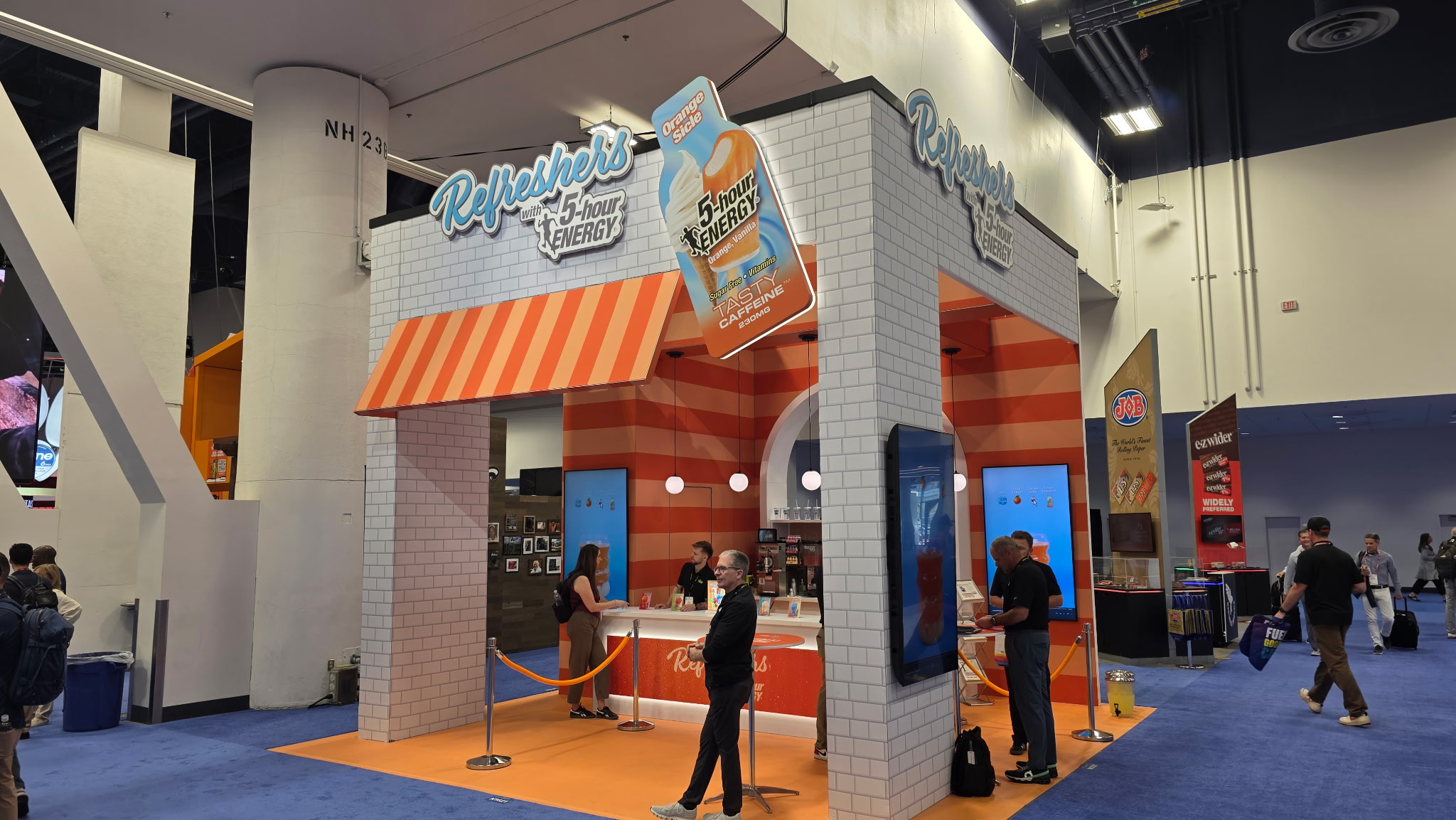
5-hour ENERGY is typically recognized as the energy shot by the register at gas stations. Now, it aims to show retailers a new side of the brand, introducing 5-hour ENERGY Refreshers as a pour-in that adds energy and flavor to slush and fountain drinks.
After NACS 2025, the brand took a hard look at its exhibit. The branding, design and staff were working, but the product itself needed to take center stage. A traditional booth could tell retailers about Refreshers, but 5-hour ENERGY saw a greater experiential opportunity.
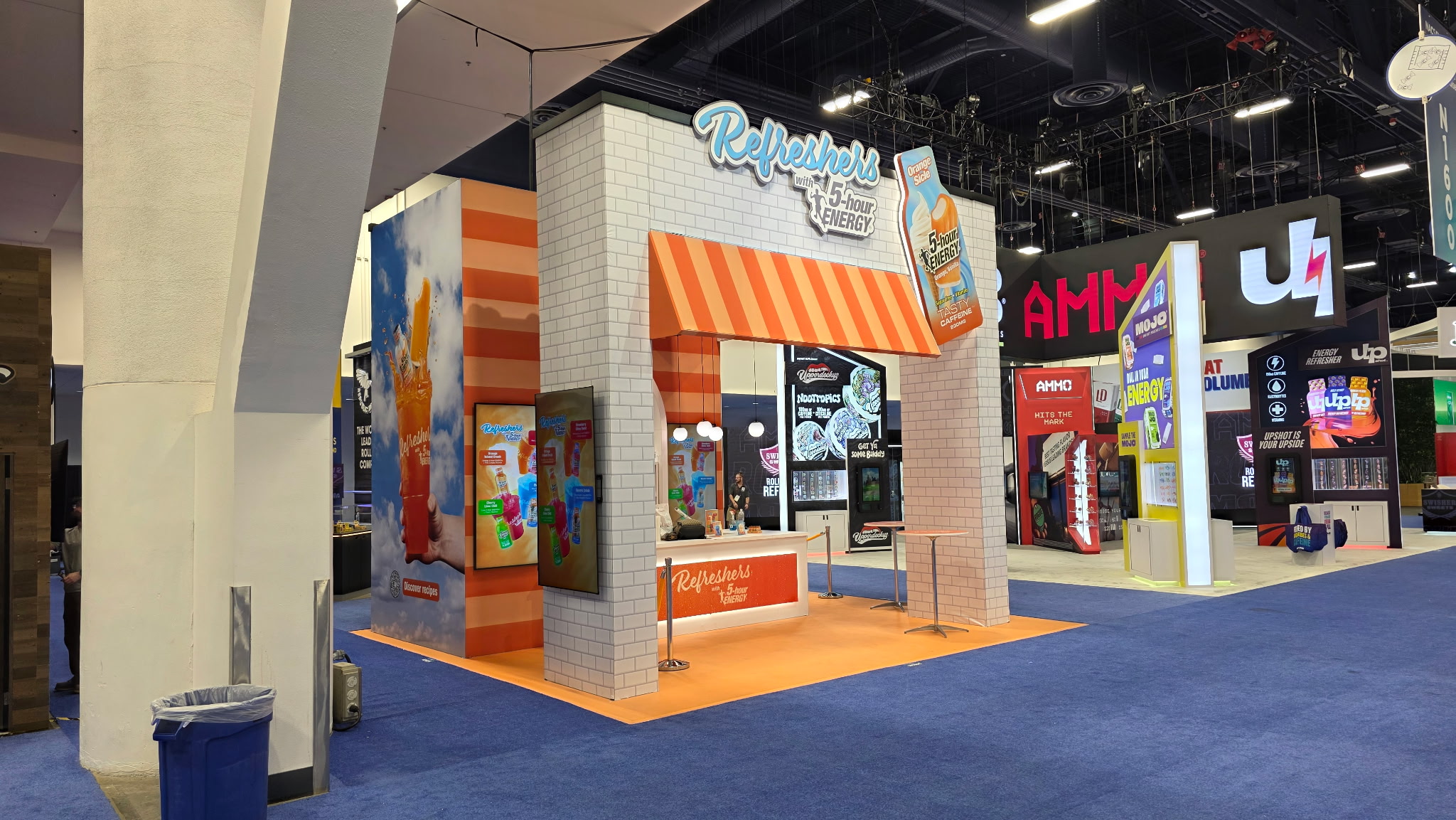
At NACS 2026 in Las Vegas, the brand planned its presence in two layers. On the show floor, a 20-by-20-foot exhibit drew traffic and let attendees sample custom Refreshers straight from working slush machines, with live demos showing how easily retailers could offer them in their own stores. Off the floor, three private meeting rooms became themed spaces: a green room, a candy store and a frozen treat room, where key buyers could taste the lineup and talk business away from the aisle. Captivate designed and built the exhibit and worked with 5-hour ENERGY’s in-house team to bring it all to life.
The experience made new possibilities available that a traditional booth couldn’t. Tasting Refreshers firsthand let retailers see 5-hour ENERGY in a different light, not just as a shot by the register, but as a way to create new drinks and build basket size. The private rooms gave the buyers who decide shelf space a VIP feel an open footprint can’t match, and the bright, colorful spaces were designed to be shared on social media, further elevating the brand’s presence.
The industry took notice. 5-hour ENERGY was named a finalist for the NACS 2026 BOSS Awards, which recognize the best experiential design on the show floor. For a brand that spent the year rethinking its show presence, it’s a clear sign the shift paid off.
The Bottom Line: Start Harnessing the Experience
A great exhibit is still worth building well, and it still does the important work of drawing people in. But a thoughtful experience designed to engage your audience can take your brand presence to the next level and bring long-lasting value. The right partner can ask what you want attendees to walk away having done, and help design everything you need to make it happen.
Thinking through what your next show experience could be? Connect with us.