
Article at a Glance
Yes, when done correctly with strategic objectives top-of-mind. Trade shows benchmark as one of the highest-ROI channels in B2B marketing, with face-to-face meetings helping build deep trust and expediting sales.
Neither, because they do different jobs. Digital builds awareness at scale during the research phase of a purchase, whereas trade shows convert that awareness into engagement via real conversations with decision-makers who are either ready to buy or close to it. The strongest programs run both together.
Set your goal before the show, track cost-per-qualified-lead the same way you track every other channel and report results in tiers.
Trade shows can’t be treated as a standalone marketing tactic like they used to be. In a digital-first buying journey, trade shows can play a very different role: turning awareness into human interaction, giving buyers a reason to engage with a brand in person and creating experiences digital channels can’t replicate.
Are Trade Shows Still Worth the Investment?
The long answer: The clearest proof is where the money keeps going. CEIR’s 2026 Marketing Spend Decision Report found exhibitions still contribute to approximately 41% of exhibitors’ total marketing budgets – a share that has barely moved since 2017. It also found that 47% of exhibitors plan to keep the same show schedule in 2026, and another 28% plan to add additional shows to their calendar.
But continued investment isn’t the same thing as strategic effectiveness. The better question isn’t whether companies are still spending on trade shows; it’s whether they’re giving those investments a job to do within the larger marketing strategy.
CEIR shows 94% of trade show attendees hold some form of net-buying influence, meaning they specify, recommend or help decide on a purchase. That matters because trade shows compress the distance between marketing and sales. Instead of waiting for a prospect to move through a digital funnel before a sales conversation happens, exhibitors have the opportunity to identify interest, answer questions, demonstrate expertise and build trust in a single interaction.
It’s not only about convincing someone to make a purchase. It’s about giving them a reason to remember the experience.
A trade show is one of the few marketing environments where a brand can control what a prospect sees, hears, touches and experiences — all while having a real conversation with them. An IAEE study found that 67% of trade show attendees are entirely new prospects—buyers a company hasn’t reached through any other channel.
Yes, digital marketing is essential to maintaining a relationship, but it can’t build one like an in-person interaction can.
Trade Shows vs. Digital Marketing: Which is Better?
The question isn’t which channel wins. It’s what each channel can do that the other can’t.
|
Trade shows |
Digital marketing |
|
Put you in front of buyers who already have purchasing authority. |
Builds awareness at scale, meaning you can reach buyers before they’ve started actively researching who are unaware of your brand. |
|
Give you a face-to-face conversation that builds trust and cultivates a relationship with the customer. |
Keeps you visible throughout the entire buying process. |
|
Enhance your business’s credibility by personifying your brand as a physical exhibit. |
Costs less per lead for broad reach and early-funnel nurture. |
|
Let prospects see, touch or experience a product in person, which is something screens cannot replicate. |
Runs continuously, working 24/7 rather than only during a show’s few days on the calendar. |
|
Give you real-time read on messaging. You can see which pitch lands by watching the reaction, not waiting on analytics. |
Allows precise targeting and retargeting based on what a buyer has actually shown interest in. |
It is better to think of the two channels as two different stages of the same buyer journey because the most effective trade show programs don’t start when the exhibit goes up. They start weeks or months earlier, when a company uses digital channels to build awareness, identify target prospects and create anticipation. At the show, that digital audience has an opportunity to become a physical interaction. Afterward, the conversation continues through content, email, social and sales follow-up.
In other words, don’t choose between digital and trade shows. Design them as one connected customer journey.
Extending the Brand Experience
Despite a strong following, their team knew subscriber count only goes so far. If they wanted to take their presence to the next level, they had to create a space for current fans to associate with them in real time, creating an immersive experience for them to partake in.
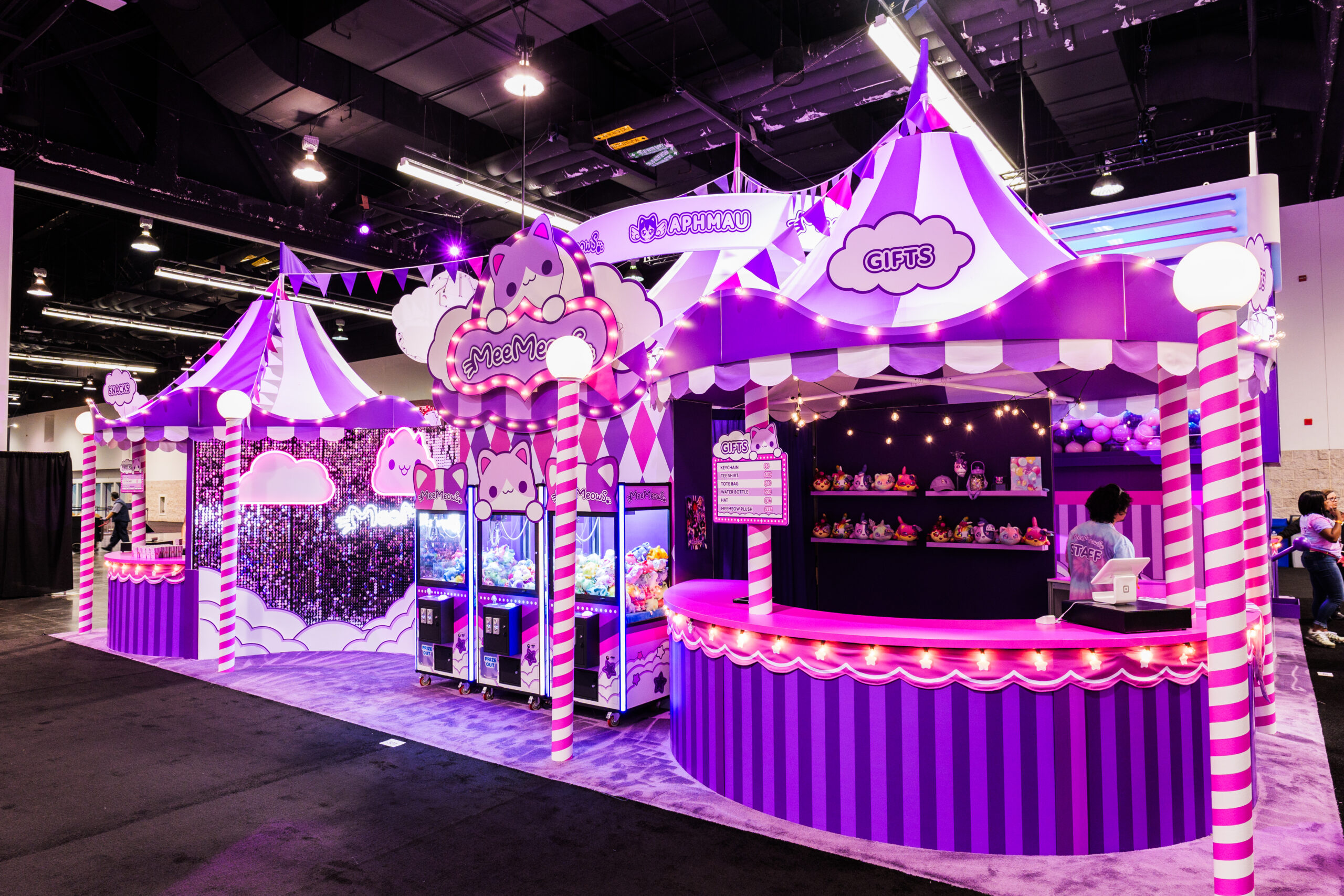
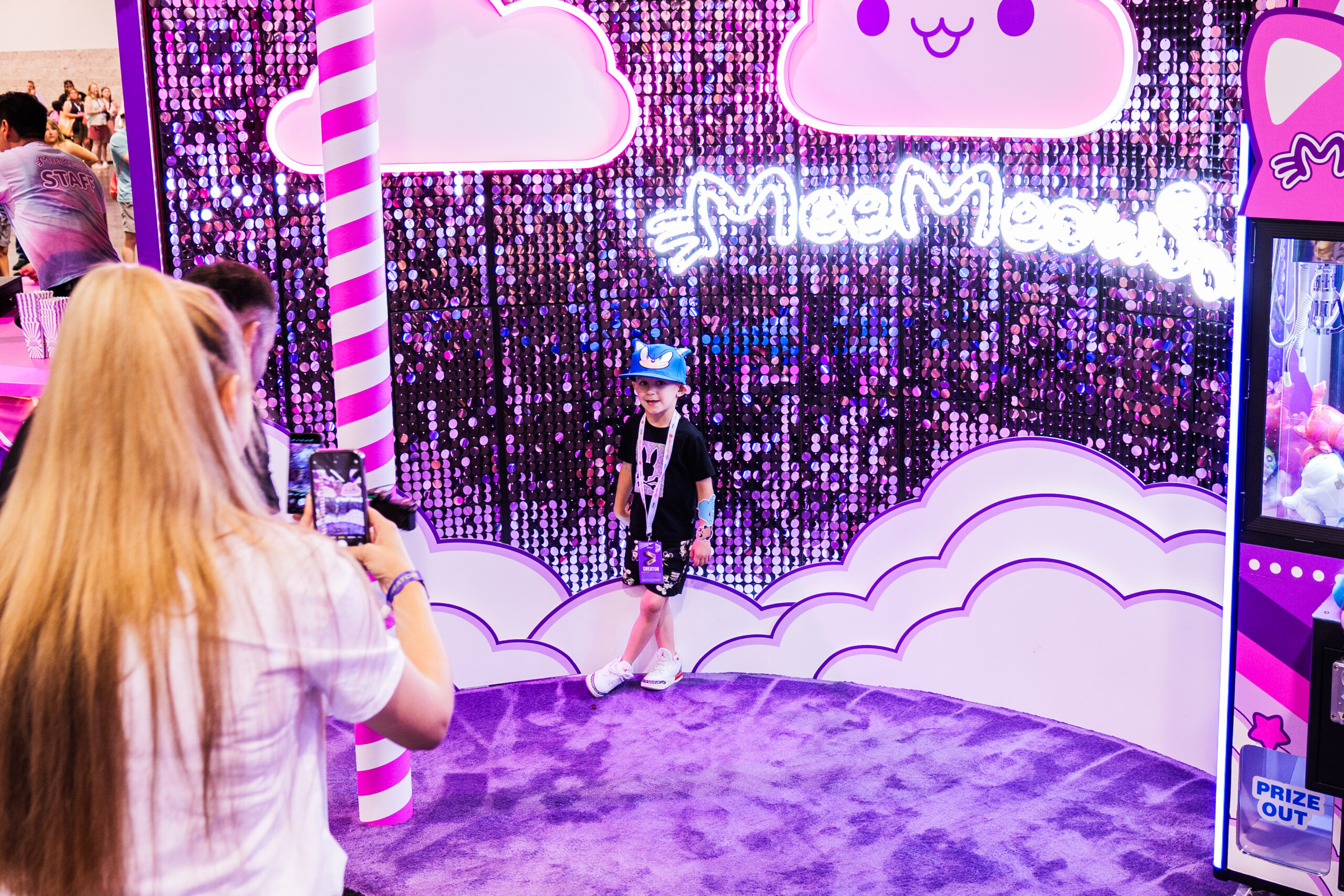
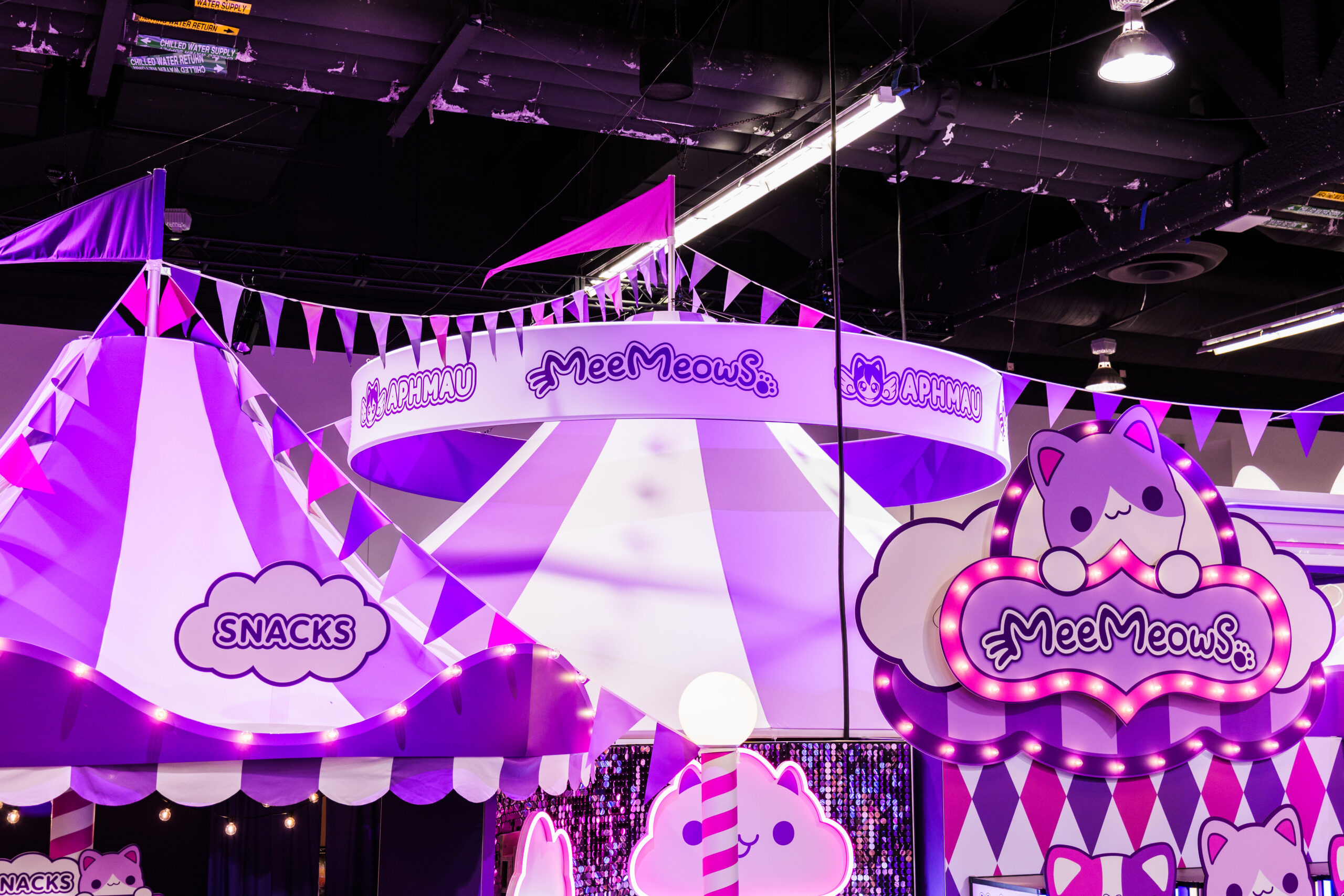
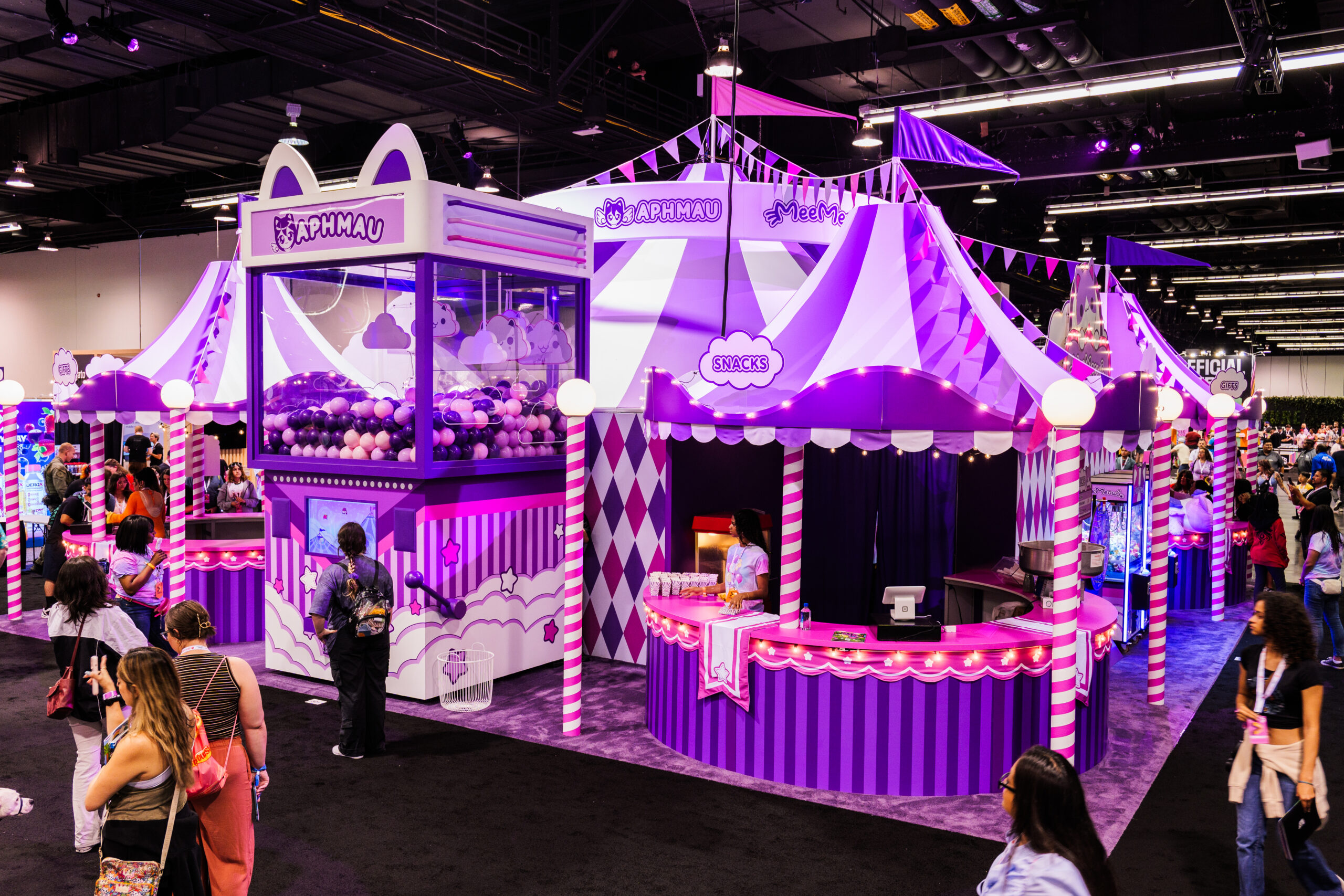
With that in mind, for VidCon 2024, Captivate built “MeeMeows by Aphmau,” a carnival-themed exhibit centered on a Skee-Ball game and a giant plush-prize slot machine tied to Aphmau’s merchandise. Fans who’d never met the brand outside of their screens waited three hours or more to get in, and Event Marketer named it the “busiest booth on the show floor.”
The digital following did its job building the audience, but the exhibit is what took Aphmau’s presence to the next level and turned subscriber statistics into an entire convention hall full of people interacting with the brand.
That’s the distinction marketers should keep in mind: digital created the audience; the physical experience gave that audience somewhere to go. The two weren’t competing for attention. They were extending the brand experience into different environments.
How do I Justify Trade Show Spend to Leadership?
- Change the conversation: Start by shifting the question from “What did the show cost?” to “What business outcomes was the investment designed to produce?” Cost alone makes any trade show look expensive. Framing the spend around outcomes puts it on the same footing as every other investment leadership approves.
- Set the goal before you set the budget: Asking strategic questions is important before you can think about setting foot on the trade show floor. A lead-generation show should be measured on cost-per-qualified-lead and pipeline. On the other hand, a brand-awareness show should be measured on engagement, media coverage and perception.
Knowing your end goal helps you stay organized, streamlines the process, aids you in tracking statistics and makes your trade show ideas easier to pitch to leadership.
- Track cost-per-qualified-lead as with any other campaign: Leadership judges every other channel based on statistics, and this shouldn’t change for trade shows, so ensure your exhibit has documented, concrete proof of its effectiveness.
- Report in tiers, not once: The people at your exhibit and the conversations you have with them tell one story, but the business partnerships and revenue they generate over the following year are what leadership cares about. Consider setting a schedule to share results immediately after the show, then again at 90 days and 365 days.
- Don’t rely on an industry-wide ROI number to make your case. Build your own benchmark. Compare shows against previous events, other marketing channels and, most importantly, the business outcomes they were designed to influence.
Trade shows don’t need to beat digital marketing to earn their place in the mix. They need to do what digital can’t. The strongest programs use digital to build awareness, trade shows to create meaningful human interaction and both together to move buyers forward. The result isn’t an either/or marketing strategy. It’s a connected one.
If you’re building the case for your program with leadership, or want a partner who thinks about ROI the same way you do, get in touch with us.